In a 30,000 square foot facility on Horton Street, technicians grow sheets of material that end up in Paris. The material is Fine Mycelium—engineered from the root structure of reishi mushrooms. The company is MycoWorks.
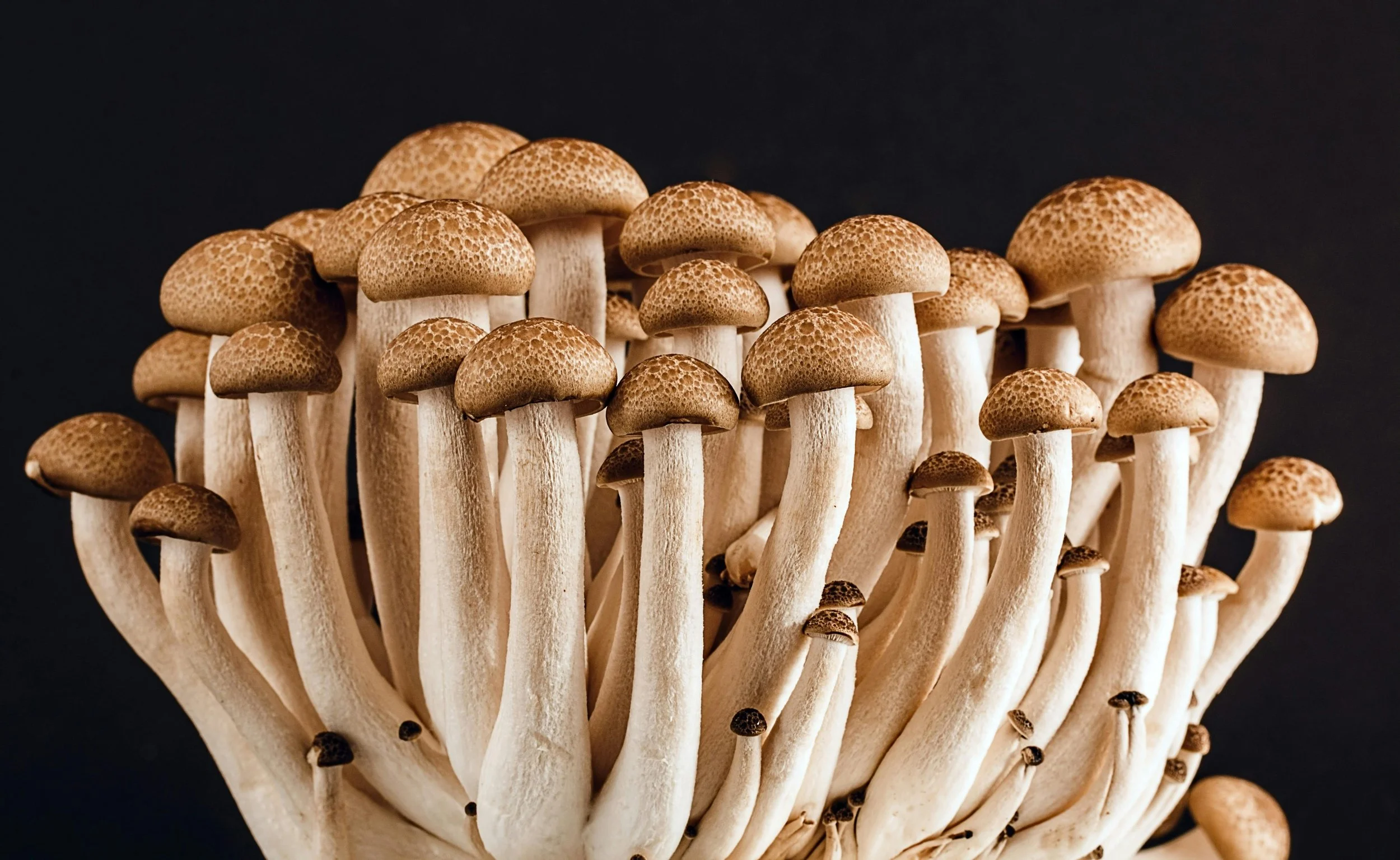
The path here started in a San Francisco art studio before moving to Emeryville.
Phil Ross began growing reishi mushrooms in the 1990s while working as a hospice caregiver during the HIV crisis. He cultivated them for their medicinal properties, but noticed something else: the material was beautiful. Colors, textures, densities shifted in response to light, air, temperature. He started using mycelium as a medium for sculpture.
His work launched a field. Ross coined the term "mycotecture" in 2008 to describe designing and building with mycelium. His installations have been exhibited at MoMA, Kunsthalle Düsseldorf, and The Moscow Biennale of Contemporary Art.
Sophia Wang encountered Ross's work in 2007. She was finishing a PhD in poetry at UC Berkeley and maintaining a dance practice. She recognized the material's potential—and understood the role that storytelling would play in communicating it. In 2013, they co-founded MycoWorks.
The early team converted Ross's art studio into a workshop laboratory, advancing his techniques into Fine Mycelium—a patented process that engineers mycelium as it grows, creating interlocking cellular structures that are dense and strong.
In 2019, MycoWorks moved to Emeryville. The team grew from 5 to 45.
Then came Hermès. After three years of collaboration, the French fashion house unveiled a version of its Victoria bag using Sylvania—a material made from Fine Mycelium, tanned and finished by Hermès craftspeople in France.
Wang, now Chief of Culture, put it simply: "I think the diversity of thinking that started with the company's founding, an artist's thinking within a material-science space, has carried over into the very diverse team that we've built. Because diversity of thinking is what produces the most innovative solutions."
What began as sculpture is now material science.
The work happens in Emeryville.